If you’re an e-commerce entrepreneur in 2026, you live in a world where your customers might be in California, your suppliers in Shenzhen, your fulfilment partner in Poland, and your operations—well, everywhere and nowhere at the same time. You are part of a global commercial ecosystem even if your business was born on a laptop in your spare room. But when you walk into a traditional bank, you’re still treated like a strange anomaly. Banks expect tidy geographic boundaries. They expect residency to match business activity. They expect money to flow within predictable borders. And you show up with a company in one country, customers in twenty, and payouts arriving in four currencies.
This is the tension at the heart of modern e-commerce: global business, local banking. Offshore banking exists to resolve that tension, yet most guides about “best offshore banks” read like they were written for investors from 2014—not merchants from 2026. They list random jurisdictions, generic benefits, and vague warnings, but they do not address what e-commerce entrepreneurs actually face: the operational realities of cross-border payments, the compliance pressures surrounding high-volume transactions, and the enormous challenge of proving the legitimacy of revenue that originates from online marketplaces and payment processors rather than a single corporate client.
This article isn’t going to rehash generic offshore advice. Instead, it speaks directly to the online sellers—the Shopify operators, Amazon merchants, dropshippers, digital-goods creators, subscription businesses, and marketplace entrepreneurs—who operate in the real modern economy and need banking that can support it.

Why E-Commerce Has Outgrown Traditional Banking
To understand why offshore banking has become essential, you first have to understand how ill-suited traditional banks are to digital commerce. Banks were built for a world where money flowed like water through pipes: large payments, predictable intervals, steady clients, and a geographically stable base of operations. E-commerce transactions don’t behave like that. They arrive at all hours, from unpredictable geographies, through intermediaries who hold funds, delay payouts, apply fraud checks, or impose rolling reserves. A bank officer looking at an e-commerce merchant account for the first time encounters dozens of small payments, occasional spikes, scattered refunds, and customer names from every timezone on Earth. The pattern looks chaotic even when the business is perfectly legitimate.
For the entrepreneur, this is normal life. For the bank, it is a risk puzzle that demands enormous due diligence. And since the banking world is now ruled by compliance rather than relationship management, the default reaction is caution, not curiosity. Offshore banking steps into this gap by offering accounts that are structurally designed for global usage. But even then, banks have become more demanding. They want to understand the business model. They want to understand the geography of customers. They want to understand the payment processors involved and the path funds take from the customer’s card to the merchant’s bank account. In other words, they want clarity.
What Offshore Banks Really Want From E-Commerce Clients
The biggest misconception about offshore banking is that entrepreneurs are rejected because banks don’t like online businesses. In reality, offshore banks love e-commerce entrepreneurs who are well organised, compliant, and transparent. What they dislike is ambiguity. They dislike stories that don’t match transaction realities. They dislike a mismatch between business claims and digital presence. They dislike unexplained payout patterns from platforms like Stripe or PayPal. The best offshore banks for e-commerce entrepreneurs are not the ones that promise easy onboarding—they’re the ones that reward clarity.
A bank wants to understand what you actually sell, how your customers pay you, how you fulfil orders, and what your cash flow looks like. They want to be able to defend your business model during an audit. The e-commerce entrepreneur who can articulate their supply chain, customer base, and sales channels in simple terms is at a massive advantage. The one who shrugs and says “I sell online, it’s complicated” will almost certainly hit resistance.
This is why narrative coherence has become a secret requirement. An entrepreneur who can explain their business in a clean, chronological story builds trust instantly. And in 2026, trust is worth far more than the size of your first deposit.
The Hidden Risks That Make Banks Nervous
E-commerce businesses don’t look risky because of what they sell. They look risky because of how their money behaves. High-volume, low-value transactions are difficult for banks to analyse. Returns and refunds create payment reversals that resemble fraud patterns. Chargebacks are a compliance headache. Payment gateways impose their own risk filters, meaning the merchant is already under scrutiny before the funds reach the bank.
Offshore banks know all of this, and that’s why they ask so many questions. They want to be sure that the business model is legitimate, that the traffic is organic, that the customers are real, and that the fulfilment processes don’t create downstream liability. When a bank sees unusual transaction geography—hundreds of payments from different continents—it needs reassurance that the merchant has systems for fraud mitigation. This doesn’t mean e-commerce entrepreneurs are unwelcome. It means they are misunderstood.
Your job is to replace misunderstanding with clarity.
What Actually Makes a Bank “Good” for E-Commerce Entrepreneurs
The right offshore bank for an e-commerce business in 2026 isn’t simply the one with remote onboarding or the one with low fees. It’s the one that can support the way digital commerce actually works. E-commerce entrepreneurs need multi-currency support because their customers exist in dozens of countries. They need fast settlement because cash flow is oxygen. They need debit or virtual cards to pay suppliers and advertising platforms. They need compatibility with international payment processors. They need mobile apps that allow them to operate on the move. And most importantly, they need compliance teams that understand digital business models.
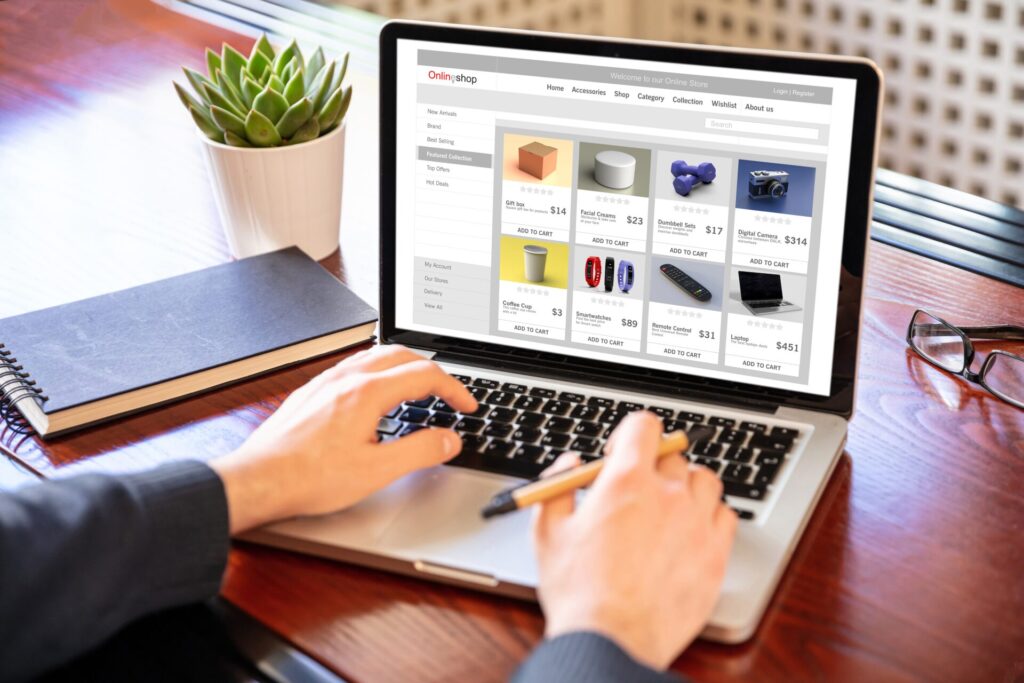
This is where many banks fall short. They treat e-commerce the way they treat traditional consulting firms or holding companies: as if revenue arrives from clearly identifiable corporate clients. The banks that stand out—the ones that deserve to be called the best—are the ones that recognise e-commerce as a legitimate, borderless economic engine rather than a suspicious anomaly.
These tend to be institutions in jurisdictions that have embraced digital business: Panama, Georgia, Armenia, the UAE, and a handful of emerging fintech-oriented financial hubs. Each offers something different. Panama provides mature multi-currency banking with strong merchant compatibility. Georgia offers openness and speed. Armenia has become surprisingly friendly to digital nomads and online operators. The UAE, particularly Dubai, is ideal for scaling brands that need a robust corporate presence. None are perfect. But all have advantages that e-commerce entrepreneurs can leverage if they present their business clearly.
Why So Many E-Commerce Banking Applications Fail
Most failures have nothing to do with the applicant’s business quality. They come down to misunderstandings. The entrepreneur assumes the bank already knows how e-commerce works. The bank assumes the entrepreneur understands the need to explain it. Both assumptions are wrong. When a bank officer sees transaction flows moving from Stripe, PayPal, Amazon, or Shopify, they need proof that these payouts reflect legitimate commercial activity. They need documentation that links the merchant’s online storefront to their sales history. They need evidence of fulfilment processes. They need reassurance that customers are genuine.
Entrepreneurs often provide too little detail or too much incoherent detail. They confuse the bank by offering screenshots, half-complete explanations, or jargon-heavy descriptions of how sales, shipping, and customer flows work. Offshore banks don’t have time to interpret chaos. They reward simplicity. A clear explanation of how customers find the business, how the business fulfils orders, how refunds are handled, and how funds flow from the customer to the merchant is far more persuasive than pages of analytics.
How E-Commerce Entrepreneurs Should Choose Their Offshore Bank
Choosing the right bank is not a matter of picking the one with the fanciest website or the friendliest marketing. It’s a matter of alignment. An entrepreneur selling low-cost digital downloads will have different banking needs than one shipping physical goods across continents. A merchant relying on Amazon FBA payouts needs different capabilities than one paid via Stripe for high-ticket coaching programs. Chargeback sensitivity, customer geography, advertising spend, fulfilment timelines, and even average cart values all influence the banking decision.
A thoughtful approach begins with examining how money moves through the business. Once an entrepreneur understands their own flow, the banking decision becomes far easier. They can evaluate jurisdictions in terms of compatibility rather than reputation. They can choose based on operational fit, not hearsay.
The Offshore Banking Quick Start Guide shows you exactly what documents to prepare, how to structure your KYC packet, and how to present yourself as a low-risk, highly bankable client.
Download the Guide ($9)
Building a Bank-Ready E-Commerce Profile
Preparation is everything. A bank in 2026 does not approve e-commerce clients because the products are innovative or because the business is growing fast. It approves them because the owner can present a stable, comprehensible story. The best offshore banks for e-commerce entrepreneurs are not looking for perfection—they’re looking for predictability. If you can show consistent sales history, explain your customer journey, map your transaction flow, and document your fulfilment process, you become low-risk even if your business is high-volume.
Banks reward applicants who think like risk managers, not like hustlers. They approve the entrepreneur who treats onboarding as seriously as they treat their first major wholesale shipment or advertising campaign. In the world of offshore banking, competence is currency.
Conclusion: Offshore Banking as an Advantage, Not an Obstacle
For the modern e-commerce entrepreneur, offshore banking is not a workaround—it is a foundation. It provides stability in a business where revenue sources shift, customer locations fluctuate, and payment processors impose unpredictable restrictions. But offshore banking in 2026 is also a system that values clarity above all else. The best banks for e-commerce entrepreneurs are the ones that understand digital commerce, support global operations, and respect applicants who come prepared.
In the end, the relationship between an e-commerce merchant and their bank is not adversarial. It is collaborative. The bank wants a client it can understand and defend. The entrepreneur wants a bank that can keep pace with a borderless business model. When both sides recognise their needs, the partnership works.